Get Involved

Sponsor an Orphan
Fundraise
Donate Online
Volunteer

Malaria

Extract from the World Health Organisation Website – Malaria is a life-threatening disease caused by parasites that are transmitted to people through the bites of infected female Anopheles mosquitoes. It is preventable and curable. There are 5 parasite species that cause malaria in humans, and 2 of these species – Plasmodium falciparum and Plasmodium vivax – pose the greatest threats.

There were an estimated 246 million cases of malaria in 2024, and the estimated number of malaria deaths stood at 597,000.

The WHO’s latest update – 2024

Mortality rate, 2016
Zambia 34.9 – Mortality rate 27 highest in the world

According to WHO’s latest World malaria report, there were an estimated 282 million cases and 610, 000 malaria deaths worldwide in 2024. This represents about 9 million more cases in 2024 compared to 2023. Approximately 95% of the deaths occurred in the WHO African Region. Children under 5 years of age accounted for approximately 76% of all malaria deaths in this Region.

In many remote communities people have to rely on bacteria-infected streams and contaminated shallow wells, and in some areas from rivers teaming with crocodiles, to obtain water. Schistosomiasis, also known as Balharzia, is common.

Malaria disease caused by P. falciparum may result in death within hours or a few days of infection especially in those with a low immunity such as children, pregnant women, people with AIDS and travellers with little or no malaria protection. It can also result in the miscarriage of pregnant women, low birth-weight infants, developmental disabilities and other complications.

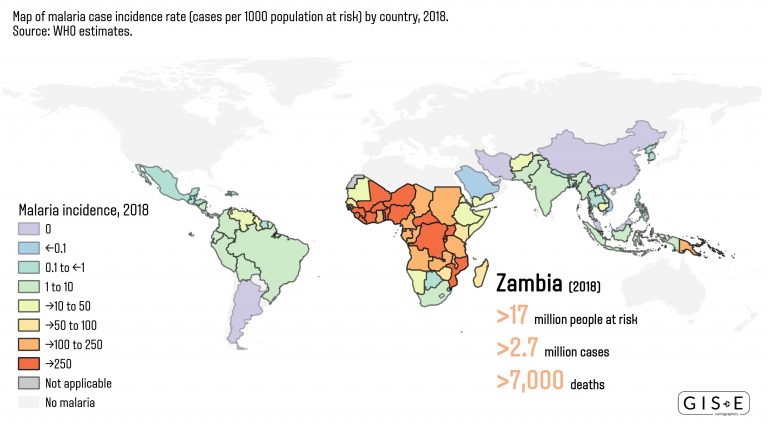
Map courtesy of GIS+E of malaria case incidence rate (cases per 1000 population at risk) by country, 2018. Source: WHO estimates. Malaria incidence, 2018 0.1 to 1 1 to 10 =10 to 50 >50 to 100 >100 to 250 →250 Not applicable No malaria. Zambia (2018) 17 million people at risk, 2.7 million cases, 7,000 deaths

Malaria Statistics

According to the World Health Organisation in 2019, there were an estimated 229 million cases of malaria in 91 countries, an increase of 12 million cases over 2016.

Malaria deaths reached 409 000 in 2019 compared with 411 000 deaths in 2018

  • Globally malaria is one of the biggest killers of man in low-income countries
  • An estimated 3.4 billion people are at risk of malaria
  • 94% of deaths occur in the WHO Africa Region

Our support is vital – without it these vulnerable people would have limited services.
Our Malaria Projects

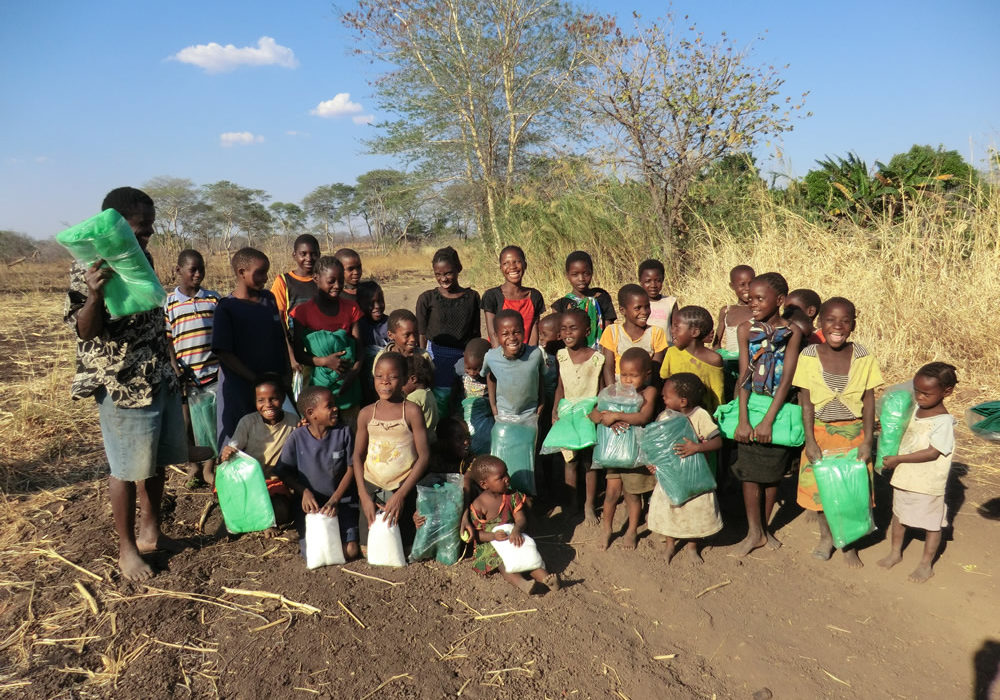
The charity also provides mosquito nets and educational workshops in remote villages and pioneered a project, ‘Mosquito nets for schools‘ in 2017. Early testing is imperative – it can be easily treated. Workshops inform the people of the importance of being tested and how sleeping under insecticide-treated nets can save lives. Community health workers provide a vital role in helping to prevent complications caused by malaria.

The Butterfly Tree helps to increase awareness and raise funds to assist Zambia’s fight against malaria. In 2015 a safe innovative malaria prevention initiative was brought into Zambia by The Butterfly Tree, with the potential to save thousands of lives. It is proving to substantially reduce the number of malaria cases in the Southern Province of Zambia. The interventions include a safe insecticidal coating, which is harmless to humans and animals, and larviciding.

The film has since been circulated to all health facilities in the Kazungula District and is one of their major methods use to sensitize the people and for facilities that do not have any equipment mobiles phone communication is being used.

To further help the global fight against malaria The Butterfly Tree has been working with Medical Aid Films. The organisation has produced a wonderful, animated video on malaria prevention, after which The Butterfly Tree had it translated into the local Tokalya language: Use this link to see the film entitled ‘How to prevent malaria‘

We have received support from Saga Charitable Trust and Medisave UK, The Murphy Family Foundation, The Agnus Lawson Memorial Trust, St James Place Foundation, Nick Bousliman, and Rotary and Inner Wheel Clubs.

How to prevent malaria video

Help Prevent Malaria

Child deaths caused by malaria have halved in the last decade. Just £6 (US$8) will buy a mosquito net to help protect people from this destructive disease.Child deaths caused by malaria have halved in the last decade. Just £6 (US$8) will buy a mosquito net to help protect people from this destructive disease.Child deaths caused by malaria have halved in the last decade. Just £6 (US$8) will buy a mosquito net to help protect people from this destructive disease.

Action over the years

Distribution of mosquito nets in Chipondo and Singwamba primary schools, and Nguba secondary school.

Distribution of 2,000 mosquito nets to school children in Kazungula and Kalomo Districts

Distribution of 3,800 mosquito nets to school children in Mulobezi District – Western Province

Further distribution of mosquito nets in Nyawa schools

Distribution of mosquito nets in Nyawa schools

Further distribution of mosquito nets in schools

Distribution of 2,000 mosquito nets to rural schools where malaria is most prevalent

Insecticidal coating and larviciding in Moomba Chiefdom

Working in partnership with Medical Aid Films, using an animated film on ‘How to prevent malaria’ in the Kazungula District health facilities

Distribution of 2,200 mosquito nets to Bunsanga, Malimba, Chilaba, Moomba, Siamasimbi, Ndele and Chuunga Schools

Distribution of insecticidal coating and larviciding in Singwamba region, Nyawa Chiefdom and Moomba Chiefdom

Translation of an animated film, produced by Medical Aid Films, on ‘How to prevent malaria’ and distributed to Kazungula District Health facilities

Zero cases of malaria in Nyawa Villages after intervention

Distibution of mosquito nets to took place in Kamwi, Chuunga and Mambova & Musokotwane Schools

Larviciding – Ngwezi, Musokotwane Chiefdom

Completion of distribution of insecticidal coating and larviciding in entire Moomba Chiefdom

Distribution of 800 mosquito nets at Sikaunzwe and Kauwewa Schools

Larviciding through Moomba Chiefdom at Kamwi area of Mukuni Chiefdom

New programme in Nyawa Chiefdom with distibution of 650 mosquito nets, insecticidal coating in 170 dwellings and larviciding in ponds and streams

No case of malaria have been recorded since application from April 2018 until May 2019

New programme in Moomba Chiefdom with distribution of mosquito nets, insecticidal coating and larviciding

Malaria cases recorded reduced between 60% and 90% from 2017

Pioneer programme – distribution of mosquito nets in schools. 1,450 given to every pupils and teacher at River View School

June, July and August no new cases of malaria reported in Mukuni Chiefdom

Only one case of malaria reported in areas where the new products have been applied, which was contracted from outside the area

The Butterfly Tree donates 2,000 mosquito nets

In 2016 Zambia saw an increase in malaria, with outbreaks turning into emergencies in the districts of Ndola, Kazungula and Kabwe. Kazungula recorded over 9,000 cases, however the entire Mukuni Chiefdom had only 200, but only a handful in the areas where our new malaria prevention intervention was applied. Whereas Singwamba, in the Nyawa Chiefdom, recorded 3,245 cases and 12 deaths in children between the ages of 1 and 13 years.In 2016 Zambia saw an increase in malaria, with outbreaks turning into emergencies in the districts of Ndola, Kazungula and Kabwe. Kazungula recorded over 9,000 cases, however the entire Mukuni Chiefdom had only 200, but only a handful in the areas where our new malaria prevention intervention was applied. Whereas Singwamba, in the Nyawa Chiefdom, recorded 3,245 cases and 12 deaths in children between the ages of 1 and 13 years.

Mukuni Chiefdom records the lowest number of cases of malaria in the Kazungula District

The Butterfly Tree reports zero cases of malaria in Chuunga Village

The Butterfly Tree launches a new innovative malaria prevention programme

The charity has been granted a licence to for importation, storage transportation and distribution of new innovative products that could potentially save the lives of thousands of people. The first distribution of the products started in November 2015.