Winter in Zambia is between June and August, although the daytime temperatures can reach up to 25 degrees the nights can drop below 4 degrees. For many this is a very difficult time, with no money to repair thatched a roof, no mattress, no blanket nor warm clothes the cold nights can be unbearable. For old people with a number of ailments, sufferers of TB and HIV/AIDS in Zambia and new born babies it can be life-threatening. I have come across a number of people who are still sleeping with no shelter, open to the elements and snakes.

Homes for Mukuni: a dwelling in Mukuni Village
The Butterfly Tree’s community housing project provides substantial mud huts with a concrete floor for the most vulnerable. Using local builders a construction can be erected for just £400 and can comfortably sleep up to four people. One woman in Mukuni Village told me that when she lies down in her new home she thinks that she must be dreaming. To date we have built over 30 of these houses but need many more . This is the time of year when the grasses are ready for gathering, old roofs can be rethatched to keep the huts dry in the rainy season.
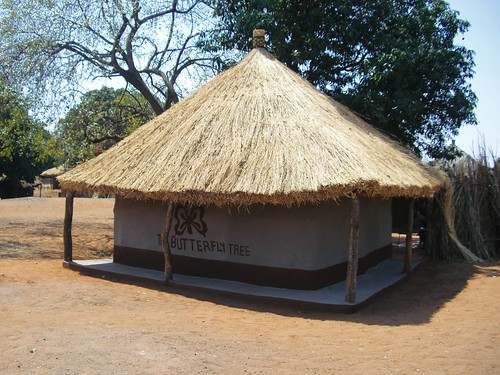
The Butterfly Tree community house
Providing a new home for a widow with young children or an elderly person who has no one to care for them can give them hope and a better chance of surving the cold winter months. A mattress at £20 and a blanket for £10 is an added bonus.